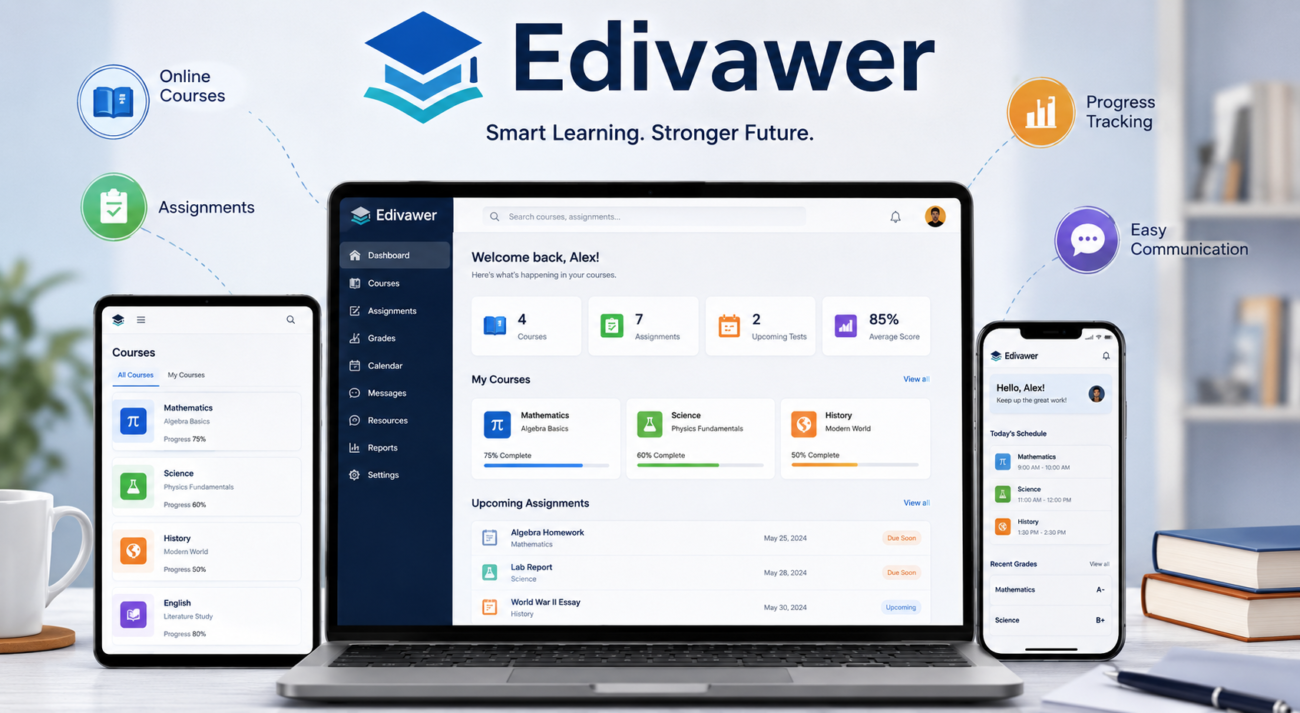
The digital learning landscape has changed dramatically over the last decade. Educational institutions, training providers, and organizations now rely heavily on technology to manage courses, track learner progress, and deliver content efficiently. Within this environment, platforms such as Edivawer have emerged as tools designed to support modern learning and educational management.
While many people encounter Edivawer through a school, training center, or online learning environment, they may not fully understand what it does or how it fits into the broader educational technology ecosystem. Looking beyond the name itself reveals a platform that reflects the growing demand for accessible, organized, and data-driven learning experiences.
What Is Edivawer?
Edivawer is generally associated with educational technology solutions that help institutions manage learning activities, academic content, student engagement, and administrative processes through a centralized digital system.
Rather than relying on disconnected tools for communication, assessments, attendance, and content delivery, platforms like Edivawer aim to bring these functions together in one environment.
The idea is simple: learners, educators, and administrators should be able to access the resources they need without navigating multiple systems.
As education becomes increasingly digital, this type of integration is becoming less of a convenience and more of a necessity.
The Growing Role of Educational Technology
To understand the value of Edivawer, it helps to look at the broader trend shaping education today.
Traditional classroom learning remains important, but educational institutions now face expectations that did not exist a generation ago. Students expect online access to materials. Teachers need efficient ways to manage assignments and assessments. Administrators require accurate reporting and performance tracking.
Technology platforms bridge these needs by creating structured digital environments where information can be shared and monitored more effectively.
This shift accelerated during periods when remote and hybrid learning became essential. Even after the return of in-person education in many places, digital learning systems continued to play a major role because they improved convenience and accessibility.
Key Features Commonly Associated with Edivawer
Although specific implementations may vary depending on the institution or organization using it, Edivawer typically focuses on several core areas.
Learning Management
A central component is learning management functionality.
This allows instructors to organize courses, upload learning materials, create assignments, and manage educational content from a single dashboard.
Students can access lessons, review resources, and complete coursework without needing physical materials for every activity.
Student Progress Tracking
Monitoring academic performance is often one of the most valuable aspects of an educational platform.
Teachers can track assignment completion, participation levels, assessment scores, and learning outcomes more efficiently than through manual record-keeping.
For students, this visibility can provide a clearer understanding of their strengths and areas needing improvement.
Communication Tools
Communication remains one of the biggest challenges in educational environments.
Platforms such as Edivawer often include messaging systems, notifications, announcements, and discussion features that help keep students and instructors connected.
This becomes particularly useful when classes include remote learners or when important updates need to reach large groups quickly.
Assessment and Evaluation
Digital assessments offer advantages beyond convenience.
Automated grading for certain question types can reduce administrative workload, while detailed reporting helps educators identify learning trends and knowledge gaps.
The result is often faster feedback and better-informed instructional decisions.
Administrative Management
Educational institutions spend significant time managing schedules, attendance records, course registrations, and academic documentation.
Integrated platforms help streamline these processes by centralizing information and reducing duplicate data entry.
For administrators, efficiency gains can translate into better resource management and improved operational oversight.
How Edivawer Supports Different Users
Educational technology platforms serve multiple groups simultaneously.
Each group interacts with the system in different ways and expects different benefits.
For Students
Students generally benefit from improved access to learning resources.
Course materials, assignment deadlines, grades, and instructor feedback can often be viewed in one place.
This reduces confusion and helps learners stay organized throughout a course or academic program.
For Teachers
Educators spend a considerable amount of time on administrative tasks.
A platform like Edivawer can simplify routine activities such as grading, attendance tracking, and content distribution.
By reducing repetitive work, teachers may have more time to focus on instruction and student support.
For Administrators
Administrative teams need accurate information to make decisions.
Digital systems provide reporting capabilities that help institutions track enrollment trends, course performance, attendance patterns, and other operational metrics.
Reliable data often leads to more informed planning and resource allocation.
Advantages of Using Edivawer
The popularity of educational management systems is driven by several practical advantages.
Centralized Information
One of the most noticeable benefits is having information available in a single location.
Instead of switching between multiple software tools, users can access courses, records, communications, and assessments through a unified interface.
Improved Accessibility
Students increasingly learn across different devices and locations.
Digital platforms make educational content available outside traditional classroom hours, allowing learners to study at times that fit their schedules.
Better Organization
Structured digital environments reduce the likelihood of misplaced assignments, lost documents, or missed deadlines.
Both instructors and students can maintain clearer records of academic activities.
Data-Driven Decision Making
Modern educational systems generate large amounts of information.
When analyzed effectively, this data can reveal patterns that help improve teaching strategies, curriculum design, and student support initiatives.
Challenges and Considerations
No educational technology platform is perfect, and Edivawer is no exception.
The effectiveness of any learning management system depends on several factors.
User Adoption
Even powerful software provides limited value if users do not engage with it properly.
Training and ongoing support are often necessary to ensure students, teachers, and administrators can use available features effectively.
Internet Access
Digital learning environments rely on internet connectivity.
In regions where reliable access remains inconsistent, users may face challenges in fully utilizing online educational tools.
Privacy and Security
Educational platforms often handle sensitive information, including academic records and personal data.
Institutions must ensure appropriate security measures are in place to protect user information and comply with relevant regulations.
Edivawer and the Future of Learning
The future of education is likely to involve even greater integration between technology and learning.
Artificial intelligence, personalized learning pathways, advanced analytics, and adaptive assessment systems are becoming increasingly common across the educational sector.
Platforms such as Edivawer represent part of this broader evolution.
Rather than replacing teachers, educational technology is increasingly focused on supporting them. The goal is to reduce administrative burdens, improve access to information, and create learning environments that respond more effectively to individual student needs.
As educational expectations continue to evolve, institutions will likely seek systems that offer flexibility, scalability, and meaningful insights into learning outcomes.
Choosing the Right Educational Platform
Organizations evaluating educational technology should look beyond feature lists alone.
A successful platform must align with institutional goals, user needs, technical capabilities, and available resources.
Important considerations include:
- Ease of use
- Mobile accessibility
- Reporting capabilities
- Security standards
- Integration options
- Technical support
- Scalability for future growth
The best solution is rarely the one with the most features. Instead, it is the one that effectively supports teaching, learning, and administration within a specific educational context.
Frequently Asked Questions
What is Edivawer used for?
Edivawer is generally used to support digital learning, course management, student tracking, assessments, and educational administration through a centralized platform.
Is Edivawer only for schools?
Not necessarily. Educational technology platforms can also be used by training organizations, corporate learning programs, professional development providers, and other educational institutions.
Can students access Edivawer remotely?
In most cases, yes. Digital learning platforms are typically designed to provide access from various locations and devices, provided users have the necessary credentials and internet access.
Does Edivawer replace classroom teaching?
No. Its primary purpose is usually to support and enhance teaching rather than replace educators. It serves as a tool for organizing and delivering learning experiences.
Why are learning management platforms becoming more important?
They help institutions manage growing amounts of educational content, improve communication, track learner progress, and provide greater flexibility for students and instructors.
What should organizations consider before adopting a platform like Edivawer?
They should evaluate usability, security, support services, scalability, integration capabilities, and how well the platform aligns with their educational objectives.
Final Thoughts
Edivawer reflects a broader shift toward digitally supported education. As learning environments become more connected and data-driven, platforms that centralize educational processes play an increasingly important role.
For students, they provide easier access to learning resources and progress tracking. For educators, they simplify many administrative tasks. For institutions, they offer greater visibility into academic performance and operational efficiency.
The real value of a platform like Edivawer lies not in the technology itself, but in how effectively it supports meaningful learning experiences and helps educational communities work together more efficiently.
