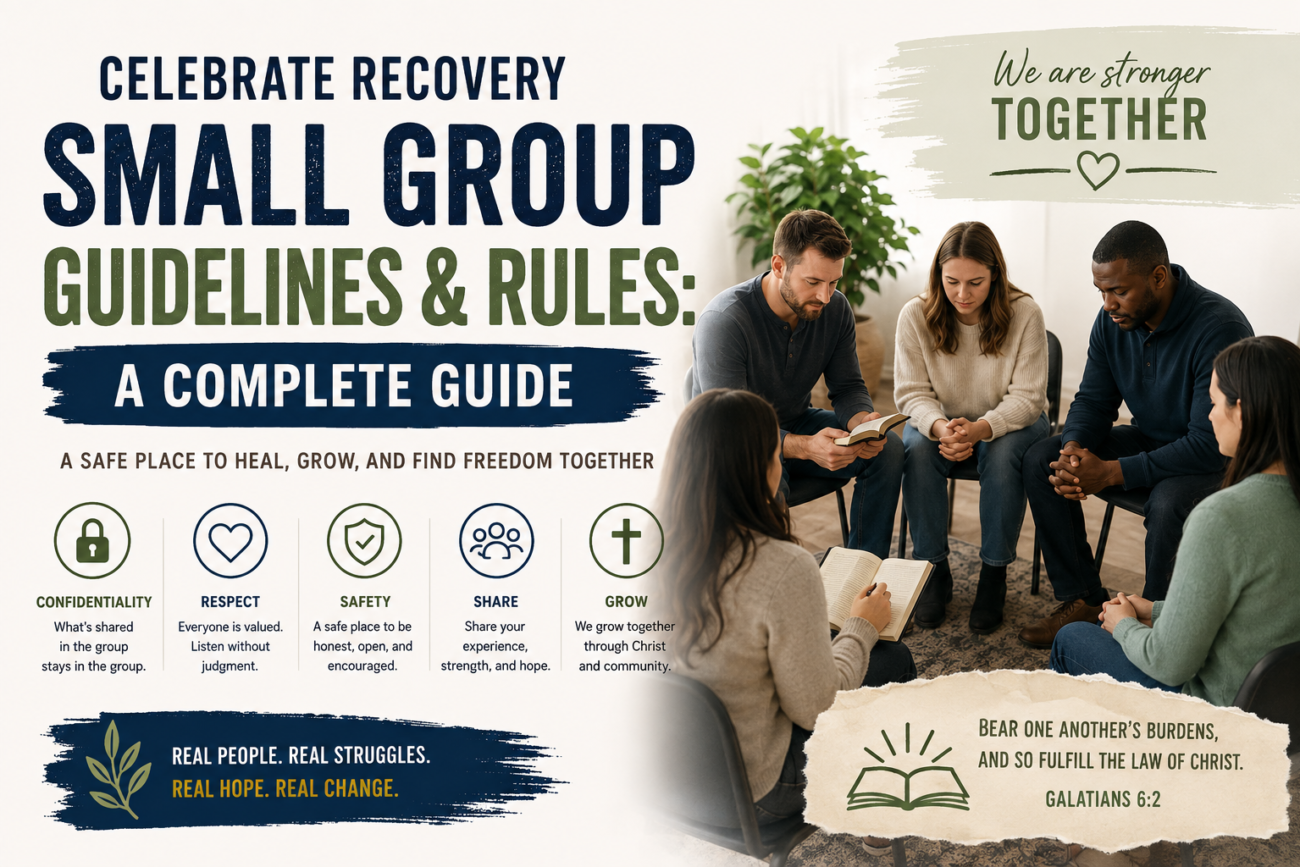
Celebrate Recovery has helped millions of people overcome life’s hurts, habits, and hang-ups in a safe, Christ-centered community. But here’s the thing—that sense of safety doesn’t just happen on its own. It’s built on a set of Celebrate Recovery small group guidelines that everyone agrees to follow.
If you’re new to Celebrate Recovery, thinking about joining a small group, stepping into a leadership role, or simply curious about how these groups work, you’re in the right place. This guide will walk you through everything you need to know in a clear and easy-to-understand way.
Whether you’re looking for small group guidelines for Celebrate Recovery, trying to understand the small group guidelines Celebrate Recovery groups follow every week, or just want a straightforward explanation of the overall Celebrate Recovery guidelines, we’ve got you covered.
What Is Celebrate Recovery?
Celebrate Recovery (CR) is a biblically based, 12-step recovery program founded in 1991 at Saddleback Church. It was designed to help people overcome any kind of hurt, habit, or hang-up – addiction, grief, codependency, anger, anxiety, and more – through the lens of the eight recovery principles and the Christian faith. Small groups are the heart of the program, offering a confidential, structured space where people can share their stories without fear of judgment.
Because these groups deal with deeply personal and often painful topics, structure isn’t optional – it’s essential. That’s exactly why the celebrate recovery small group guidelines exist.
Why Small Group Guidelines Matter
Before diving into the specific rules, it helps to understand why they exist in the first place. Recovery groups only work when participants feel emotionally and spiritually safe. Without ground rules, sharing time can turn into cross-talk, unsolicited advice, or judgment – all of which shut down honest conversation.
The guidelines exist to:
- Protect confidentiality and trust
- Keep the focus on personal recovery, not other people’s issues
- Prevent group sessions from becoming venting sessions without direction
- Create a consistent, predictable structure every member can rely on
- Reflect the gentleness and grace at the heart of the CR mission
With that foundation in place, let’s look at the actual celebrate recovery guidelines used in every open share group.
The Core Celebrate Recovery Small Group Guidelines
These are the standard rules read aloud (or referenced) at the start of most CR open share groups. They form the backbone of small group guidelines for celebrate recovery meetings everywhere.
1. Keep Your Sharing Focused on Your Own Thoughts and Feelings
Group time isn’t for analyzing or fixing someone else. Each person is encouraged to talk about their own experience — using “I” statements rather than generalizing or speaking on behalf of the group.
2. There Is No Cross-Talk
This is one of the most important small group guidelines celebrate recovery enforces strictly. Cross-talk means interrupting, questioning, or giving unsolicited feedback while someone else is sharing. Each person gets uninterrupted time to speak, and the group simply listens.
3. We Are Here to Support, Not Fix
CR groups are not therapy sessions and members aren’t there to counsel one another. The goal is to offer support, encouragement, and understanding — not advice or solutions.
4. Respect Anonymity and Confidentiality
What’s shared in the group stays in the group. Members should never repeat outside the meeting what another person disclosed. This single rule is often what makes people feel safe enough to open up in the first place.
5. Avoid Offensive Language
Groups ask members to refrain from swearing or using language that could offend or distract others. This keeps the tone respectful, even when the subject matter is heavy.
6. Stick to Recovery-Related Sharing
While it’s tempting to talk about unrelated life events, the focus should stay on the hurts, habits, or hang-ups being worked through — keeping conversations on track and meaningful.
7. Gender-Specific and Open Share Groups Have Separate Rules
Many CR chapters split into gender-specific small groups after the large group session, specifically to create a deeper level of comfort and openness. Mixed-gender “open share” groups still follow the same core guidelines but may limit how personal certain topics get.
8. Give Everyone a Chance to Share
Group leaders keep an eye on time so that every member gets an opportunity to speak, if they choose to. No one is ever forced to share, but the space is intentionally made available for those who want it.
9. Newcomers Are Welcomed Without Judgment
First-time attendees are treated with the same respect and confidentiality as long-time members. There’s no requirement to share right away — observing is completely acceptable.
10. One Person Speaks at a Time
Simple, but essential: the group listens to one voice at a time. This ties back into the no-cross-talk rule and keeps meetings calm and organized.
How Celebrate Recovery Groups Are Typically Structured
Understanding the format helps make sense of why these celebrate recovery small group guidelines exist. A typical CR evening includes:
- Large group worship and teaching – A lesson tied to one of the 8 principles or 12 steps.
- Breakout into small groups – Usually organized by gender and sometimes by specific issue (grief, chemical dependency, codependency, etc.).
- Guideline reading – Leaders often read the rules aloud to remind everyone of expectations.
- Open sharing time – Members share as much or as little as they’re comfortable with.
- Closing prayer – Sessions typically end in prayer, reinforcing the program’s spiritual foundation.
This consistent structure, paired with the guidelines, is what makes CR groups feel safe week after week – even as members rotate in and out.
Tips for Group Leaders Enforcing the Guidelines
If you’re leading or co-leading a group, here’s how to keep the small group guidelines for celebrate recovery sessions running smoothly:
- Read the guidelines every single week. Repetition reinforces expectations, especially for newcomers.
- Gently redirect cross-talk. A simple, kind reminder is usually enough.
- Model vulnerability yourself. Leaders who share openly set the tone for the group.
- Watch the clock. Fair time distribution prevents one person from dominating the conversation.
- Follow up privately. If someone needs more support than group time allows, connect with them one-on-one afterward.
Frequently Asked Questions
Do I have to share every week in a Celebrate Recovery group?
No. Sharing is always voluntary. Many people attend several sessions before they feel ready to open up.
Are Celebrate Recovery small groups only for addiction?
No. CR groups address a wide range of issues, including grief, anxiety, codependency, eating disorders, and relationship struggles – not just substance addiction.
Is everything shared in the group confidential?
Yes. Confidentiality is one of the core celebrate recovery guidelines, and breaking it is taken seriously by group leadership.
Can I attend a group without joining the full CR program?
Most chapters welcome visitors to attend a small group session to see if it’s a good fit before committing.
Final Thoughts
The celebrate recovery small group guidelines exist for one simple reason: to create a space where healing can actually happen. Without structure, vulnerability feels risky. With it, people find the courage to be honest – often for the first time in years.
Whether you’re a first-time visitor or a longtime group leader, understanding and respecting these small group guidelines Celebrate Recovery communities rely on will help you get the most out of every session-and help others feel safe doing the same. At MeridianMediaPost, we believe that knowing these guidelines is the first step toward building trust, accountability, and meaningful recovery experiences.
