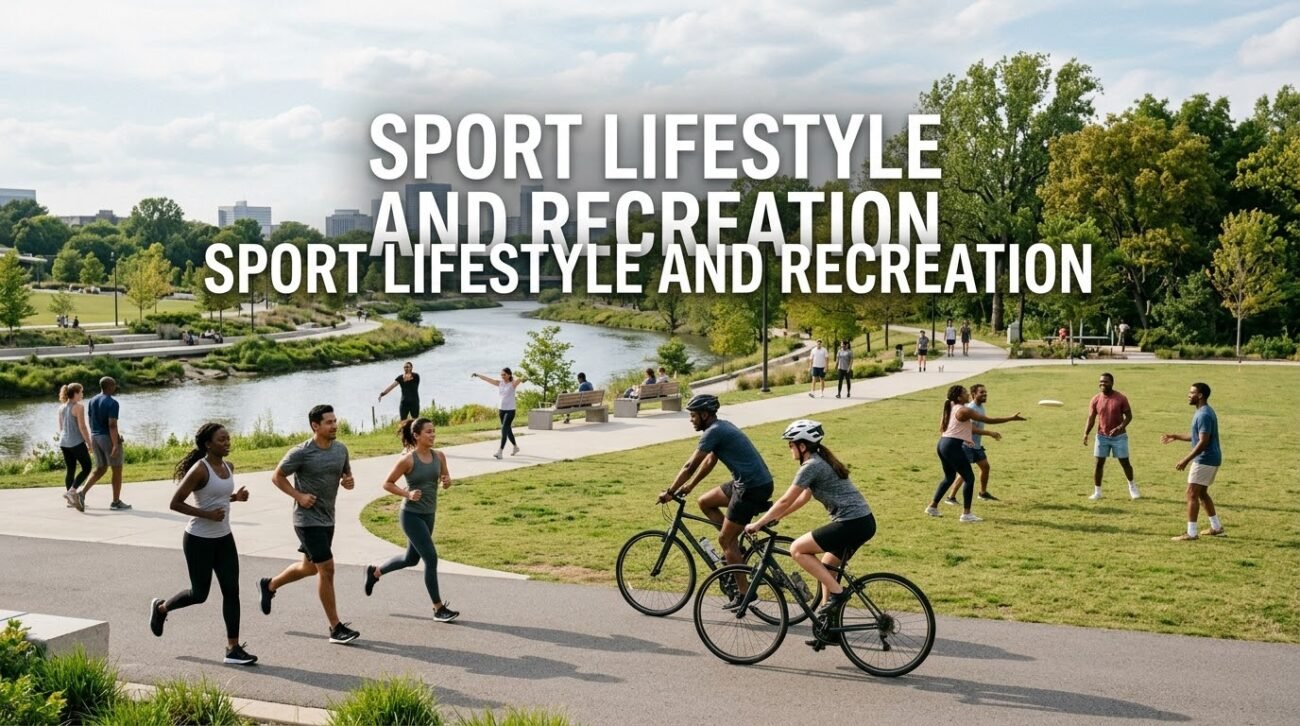
Sport lifestyle and recreation brings together physical activity, sport, leisure and the everyday choices people make around staying active. The subject matters because sport is not limited to competition; it can also be part of how people spend free time, pursue interests and organize activities around movement and recreation.
For readers unfamiliar with the term, sport lifestyle and recreation can be understood as a broad area covering sporting activities and recreational pursuits as part of everyday life. It includes the relationship between participation, leisure and personal routines rather than focusing only on professional competition.
Key takeaways
- Sport lifestyle and recreation connects sport with leisure and everyday activity.
- The subject is broader than professional or competitive sport.
- Recreational participation can take many forms depending on personal interests and circumstances.
- Lifestyle choices influence how people approach sport and recreation.
- The future of the sector will depend on how people continue to balance activity, leisure and other parts of daily life.
What Is Sport Lifestyle and Recreation?
Sport generally refers to activities involving physical participation, competition, training or skill. Recreation has a wider meaning, covering activities undertaken during free time for enjoyment, relaxation or personal interest. When these ideas are considered together, sport lifestyle and recreation describes a broader approach to activity and leisure.
The term does not refer to one particular sport or one fixed type of participant. Someone interested in competitive sport and someone who takes part in recreational activity can both fall within the wider subject.
This distinction is important because sport is often discussed through professional competitions, major events and elite athletes. Those areas receive considerable attention, but they represent only one part of the wider sporting environment.
A lifestyle perspective shifts attention toward how sport and recreation fit into ordinary routines. The focus becomes participation, interests, available time and the role that leisure activities play in a person’s broader lifestyle.
That makes the subject relevant beyond professional sport. It can also be discussed through recreational interests and the different ways people choose to spend their leisure time.
How Sport Becomes Part of Lifestyle
A sport becomes connected to lifestyle when it is no longer viewed only as an isolated activity. It can become part of how a person chooses to use free time, develop interests or structure regular activities.
The relationship can work in different ways. Some people may approach sport primarily through competition, while others may value recreation and participation. The same activity can therefore have different meanings depending on the individual.
Lifestyle also involves choices. Time, interest and personal priorities can affect whether someone participates in sport regularly or occasionally. Recreation provides another dimension because activities do not necessarily have to be competitive to become meaningful parts of leisure.
This broader view also helps explain why sport and recreation are often discussed together. Both can involve active participation and personal interests, while their purposes can differ.
Competitive sport may emphasize performance and results. Recreation can place greater emphasis on enjoyment and leisure. Between those two ends is a wide range of activities and individual approaches.
Participation Matters
Participation is an important part of understanding the subject. A discussion focused only on professional athletes can overlook the much larger idea of people engaging with sport and recreation for their own reasons.
The lifestyle element also means that sport does not exist separately from other responsibilities. People have different schedules, interests and priorities. As a result, their relationship with recreation can vary considerably.
The Role of Recreation
Recreation provides a useful way to look at sport outside formal competition. It focuses attention on what people choose to do during their leisure time and why those activities matter to them.
Sport can be recreational when participation is primarily connected to enjoyment or personal interest rather than professional competition. This creates a connection between sport and everyday leisure.
The recreational side of the subject is also important because it broadens the discussion. Instead of asking only who wins or loses, it allows attention to move toward participation and personal experience.
That perspective can make sport more accessible as a topic. A person does not need to follow professional competitions closely to have an interest in sport-related recreation.
At the same time, recreation should not be treated as identical to competitive sport. The objectives can be different, and people may participate for different reasons.
Understanding that difference provides a clearer picture of the overall sport lifestyle and recreation landscape.
What This Means for the Future
The main significance of sport lifestyle and recreation is the way it brings different forms of activity into one broader discussion. Sport can be competitive, recreational, occasional or closely connected to a person’s routine.
The next stage of the conversation is likely to remain focused on participation and how sport fits alongside other lifestyle priorities. Without specific evidence about a particular market, organization or trend, it would be inappropriate to predict exact developments or attach unsupported statistics to the subject.
What can be established from the topic itself is that the distinction between sport and recreation remains useful. It allows discussions to recognize both competitive activity and leisure participation without treating them as the same thing.
For readers and publishers, this broader framing also creates room for more specific discussions. Individual sports, recreational activities, lifestyle choices and sporting interests can each be examined separately while remaining part of the wider subject.
The practical question is therefore not simply whether someone participates in sport. It is also how that participation fits into their overall use of time and leisure.
That is where the lifestyle element becomes important. Sport and recreation can be considered not only as activities but also as parts of a person’s broader interests and routines.
Why the Topic Matters
Sport lifestyle and recreation provides a broad framework for discussing activity beyond professional competition. It connects sport, leisure and personal participation without assuming that every participant has the same goals.
For new readers, the most important point is that sport and recreation cover more than major competitions. The subject also includes the everyday relationship people have with sporting and leisure activities.
This makes the topic suitable for discussions that examine participation, interests and the place of recreation within lifestyle choices.
The lack of a single definition covering every possible activity is not necessarily a weakness. Instead, it reflects the broad nature of the subject. Different activities and different participants can be considered within the same wider framework while still having distinct purposes.
As future articles explore individual sports or recreational activities, this broader understanding can provide useful context. It establishes the difference between professional competition, personal participation and leisure without placing unsupported claims on any particular group.
FAQ
What does sport lifestyle and recreation mean?
Sport lifestyle and recreation refers broadly to the connection between sporting activities, leisure and everyday lifestyle choices. It covers more than professional competition and can include recreational participation.
Is recreation the same as competitive sport?
No. Competitive sport generally places greater emphasis on performance or competition, while recreation is more closely associated with leisure and personal participation. An activity can, however, have both competitive and recreational forms.
Why is lifestyle important when discussing sport?
Lifestyle provides context for understanding how people fit sport and recreation into their everyday routines. It shifts the discussion beyond professional competition toward participation, interests and leisure choices.
Conclusion
Sport lifestyle and recreation is a broad subject that connects sport with leisure and everyday participation. Its importance comes from recognizing that sport exists beyond professional competition and that recreational activities can form another part of the wider sporting landscape.
The clearest way to understand the subject is to consider both sides: sport as an activity and recreation as part of leisure. Looking at them together provides a broader framework for discussing participation, lifestyle and the different reasons people engage with sport.
