Corporate Social Responsibility (CSR) has evolved from a voluntary business practice into an important part of corporate governance in India. Over the last decade, India has become one of the few countries in the world to introduce a legal framework that encourages companies to contribute directly to social development.
Today, India CSR is no longer viewed as a side activity or a charitable obligation. Many organizations see it as a way to participate in nation-building while creating long-term value for communities, stakeholders, and society as a whole.
As businesses grow and influence larger sections of society, expectations around responsible behavior continue to increase. CSR serves as a bridge between corporate success and social progress, helping companies contribute beyond profits.
What Is CSR?
Corporate Social Responsibility refers to the efforts businesses make to operate ethically and contribute positively to society.
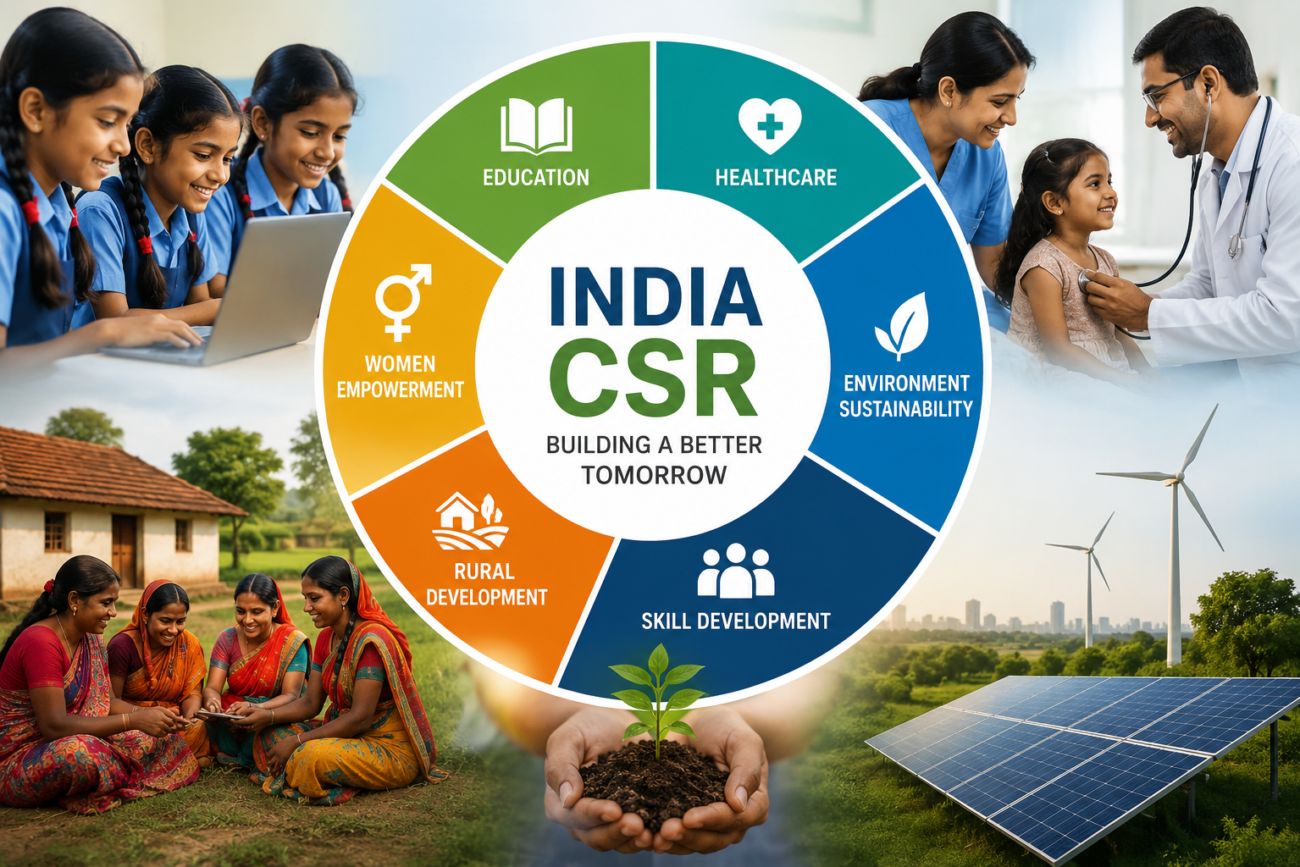
CSR activities may include:
- Supporting education initiatives
- Improving healthcare access
- Promoting environmental sustainability
- Empowering women and marginalized communities
- Developing rural infrastructure
- Encouraging skill development and employment opportunities
The core idea is simple: businesses benefit from society and therefore have a responsibility to contribute to its well-being.
While CSR exists worldwide, India stands out because of its structured legal approach.
The Evolution of India CSR
Before formal regulations were introduced, many Indian business groups were already involved in philanthropy. Industrial families such as the Tatas, Birlas, and Bajajs established schools, hospitals, research institutions, and charitable trusts long before CSR became a legal requirement.
However, these efforts varied widely from one company to another.
A significant shift occurred with the introduction of the Companies Act, 2013. Section 135 of the Act made CSR spending mandatory for eligible companies, creating a more organized framework for corporate contributions.
This move positioned India among the first countries to formally regulate CSR at a national level.
CSR Under the Companies Act, 2013
The Companies Act requires certain companies to spend a portion of their profits on CSR activities.
A company falls under CSR provisions if it meets any of the following criteria during a financial year:
- Net worth of ₹500 crore or more
- Turnover of ₹1,000 crore or more
- Net profit of ₹5 crore or more
Eligible companies are generally required to spend at least 2% of their average net profits from the previous three financial years on CSR activities.
The law also requires companies to establish a CSR committee and disclose relevant information in their annual reports.
This transparency has increased accountability and helped stakeholders understand how corporate funds are being utilized for social development.
Why India CSR Matters
CSR plays a unique role in a country as diverse and populous as India.
While governments lead large-scale development efforts, private-sector participation can help address gaps in resources, innovation, and implementation.
For example, a company operating in a remote region may be better positioned to identify local community needs and support targeted projects. This localized approach often creates meaningful outcomes that complement public welfare programs.
CSR also encourages businesses to think beyond quarterly financial results and consider their broader impact on society.
Key Areas of CSR Spending in India
CSR initiatives cover a wide range of social and environmental issues. Some sectors consistently attract significant corporate investment.
Education
Education remains one of the most popular CSR focus areas.
Companies support:
- School infrastructure
- Scholarships
- Digital learning programs
- Teacher training
- Vocational education
In many rural and underserved regions, CSR-funded educational projects help improve learning opportunities for children and young adults.
Healthcare
Healthcare initiatives often include:
- Medical camps
- Mobile health units
- Hospital equipment donations
- Maternal and child health programs
- Disease prevention campaigns
The COVID-19 pandemic further highlighted the importance of corporate support in strengthening healthcare systems.
Environmental Sustainability
Environmental concerns have become increasingly important in CSR planning.
Common projects include:
- Tree plantation drives
- Water conservation
- Renewable energy initiatives
- Waste management programs
- Biodiversity protection
Many organizations now align their CSR goals with broader sustainability commitments.
Rural Development
A large portion of India’s population still resides in rural areas, making rural development a natural CSR priority.
Projects may focus on:
- Drinking water access
- Sanitation facilities
- Village infrastructure
- Agricultural support
- Livelihood enhancement
Such initiatives often have a direct impact on quality of life and economic stability.
Skill Development
India’s growing workforce creates a strong need for employability-focused programs.
CSR funds frequently support:
- Technical training
- Entrepreneurship programs
- Digital literacy
- Industry-specific skill development
The objective is not only to train individuals but also to improve long-term employment prospects.
The Benefits of CSR for Businesses
Although CSR is often discussed in terms of social impact, businesses can also gain meaningful benefits.
Stronger Brand Reputation
Consumers increasingly pay attention to how companies engage with social and environmental issues.
Organizations known for responsible practices often enjoy higher levels of public trust.
Better Stakeholder Relationships
CSR programs can strengthen relationships with local communities, government bodies, employees, and investors.
When stakeholders see a company contributing positively, cooperation and goodwill often improve.
Employee Engagement
Employees frequently prefer working for organizations that demonstrate a commitment to social causes.
Participation in volunteering and community initiatives can also improve morale and workplace culture.
Long-Term Sustainability
Businesses operate within social and environmental systems.
Supporting community welfare, education, and environmental protection can contribute to a healthier ecosystem in which businesses themselves can thrive.
Challenges in India CSR
Despite significant progress, CSR implementation is not without challenges.
Measuring Real Impact
One of the biggest difficulties is determining whether CSR spending creates lasting change.
A project may appear successful based on financial expenditure alone, yet produce limited long-term benefits.
As a result, companies increasingly focus on impact assessment rather than simply tracking spending figures.
Uneven Distribution of Funds
CSR funding often concentrates in regions where large companies operate.
This can leave some underserved areas with fewer resources despite having substantial development needs.
Project Sustainability
Some initiatives deliver immediate results but struggle to continue once funding ends.
Sustainable planning, community involvement, and local ownership are essential for maintaining long-term impact.
Compliance Complexity
CSR regulations continue to evolve, requiring companies to stay informed about reporting standards, spending requirements, and governance expectations.
Smaller organizations may find compliance particularly demanding.
Emerging Trends in India CSR
The CSR landscape in India continues to mature.
Several trends are becoming increasingly visible.
Data-Driven Impact Assessment
Companies are moving beyond activity reporting and focusing on measurable outcomes.
Instead of simply counting beneficiaries, organizations now seek evidence of meaningful improvements in education, health, income, or environmental quality.
Alignment with ESG Goals
Environmental, Social, and Governance (ESG) considerations are gaining importance globally.
Many companies are aligning CSR initiatives with broader ESG strategies to create a more integrated approach to sustainability.
Collaboration Models
Partnerships among businesses, non-governmental organizations, government agencies, and academic institutions are becoming more common.
These collaborations often improve efficiency and increase the scale of impact.
Technology-Based Solutions
Digital platforms, online education tools, telemedicine services, and data analytics are helping CSR projects reach larger populations more effectively.
Technology has become a valuable enabler of social development efforts.
The Future of India CSR
India CSR is likely to become increasingly outcome-focused in the coming years.
Companies are expected to place greater emphasis on measurable social impact, transparency, sustainability, and community participation.
At the same time, rising public awareness will continue to encourage businesses to take a broader view of their responsibilities.
Rather than treating CSR as a compliance requirement, many organizations are beginning to see it as an opportunity to contribute meaningfully to India’s long-term development.
This shift reflects a growing understanding that economic growth and social progress are closely connected.
Frequently Asked Questions (FAQs)
Is CSR mandatory in India?
Yes. Certain companies meeting specified financial thresholds under the Companies Act, 2013 are required to comply with CSR provisions and allocate funds toward eligible activities.
How much do companies need to spend on CSR?
Eligible companies are generally expected to spend at least 2% of their average net profits from the previous three financial years on approved CSR initiatives.
What types of projects qualify for CSR spending?
Projects related to education, healthcare, environmental sustainability, rural development, skill training, gender equality, and several other social causes may qualify under CSR guidelines.
Can CSR activities improve a company’s reputation?
They can, provided the initiatives are genuine and create meaningful impact. Stakeholders often respond positively to organizations that demonstrate social responsibility.
What is the difference between CSR and charity?
Charity is typically focused on donations or immediate assistance. CSR is broader and often involves structured, long-term programs aligned with social development goals and business responsibility.
Why is impact measurement important in CSR?
Measuring impact helps determine whether a project creates real and lasting benefits. It allows companies to improve future initiatives and ensure resources are being used effectively.
Conclusion
India CSR has become an important tool for driving social and economic development. By encouraging businesses to invest in community welfare, education, healthcare, and sustainability, CSR helps create a positive impact beyond profits. As companies focus more on long-term results and accountability, CSR will continue to play a vital role in supporting inclusive and sustainable growth across India.
